
Cocamidopropyl betaine
A mild synthetic surfactant from coconut oil, widely used in sensitive-skin cleansers as a gentler alternative to traditional foaming ingredients.
Cleansing is the routine step that quietly determines how the rest of a routine performs. A well-tolerated cleanser leaves the skin in a state where serums, moisturisers, and SPFs can do their work. A poorly chosen one — typically because of the surfactant — leaves the barrier slightly compromised before any of the more targeted ingredients have a chance to help. Most reactive-skin users underestimate how much the surfactant matters. Cocamidopropyl betaine is one of the ingredients that quietly fixes this — the mild surfactant that makes a cleanser feel cleansing without being stripping.
On this page
The Clarity Summary
Cocamidopropyl betaine is one of the most widely used mild surfactants in sensitive-skin cleansers — a coconut-derived ingredient that produces enough foam and cleansing action to feel like a proper wash, without the harshness that traditional surfactants like SLS or SLES can cause. It is rarely the headline ingredient on a label, but its presence is one of the clearest signals that a cleanser was built with reactive skin in mind.
For Skincare Clarity, cocamidopropyl betaine is a Green List ingredient with one specific caveat — generally well tolerated, with a low but real allergy risk worth knowing about. For many users, it is the right cleansing surfactant; for a small minority, it is not.
What is cocamidopropyl betaine?
Cocamidopropyl betaine is a synthetic surfactant derived from coconut oil — specifically from the fatty acids in coconut, processed into a form that combines mild cleansing action with good foaming properties. On INCI lists it appears under that full name, sometimes shortened in marketing to ‘CAPB’.
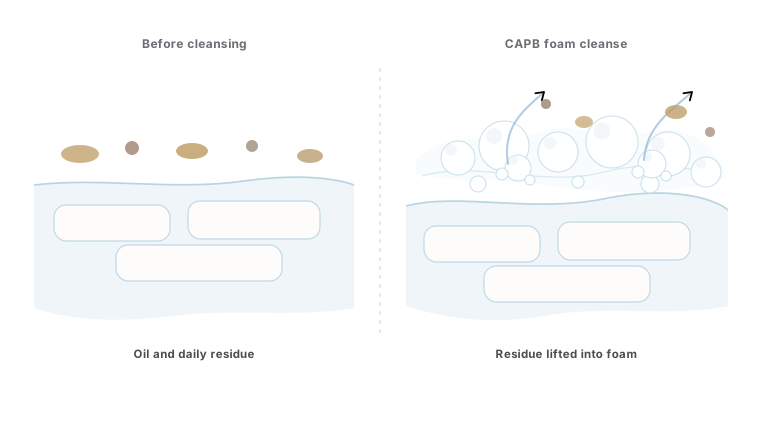
What makes cocamidopropyl betaine distinctive among surfactants is that it is amphoteric — meaning it carries both positive and negative charges depending on the pH of the formula it sits in. In practice, this means it is gentler than fully anionic surfactants (like SLS, the strong foaming agent in many traditional cleansers) but still produces enough cleansing action and foam to feel like a real wash. Most users find that combination cosmetically satisfying in a way the gentlest surfactants alone often are not.
Cocamidopropyl betaine is rarely used as the only surfactant in a formula. More often it appears alongside other mild surfactants in a balanced surfactant blend — sometimes with decyl glucoside, sometimes with other gentle foaming agents. The combinations vary, but cocamidopropyl betaine is reliably one of the most common components of well-built sensitive-skin cleansers.
Cocamidopropyl betaine as mild foam support
Why cocamidopropyl betaine matters for sensitive and reactive skin
Reactive skin is often more sensitive to cleansing than to any other routine step. Strong foaming surfactants strip the barrier, leave the skin tight afterwards, and set the rest of the routine working from a compromised baseline. The combination of a stripping cleanser plus a recovery-focused moisturiser is one of the most common patterns in failed sensitive-skin routines — the cleanser undoes faster than the moisturiser can repair.
Cocamidopropyl betaine is especially relevant when:
- your skin feels tight or stripped after washing, even with cleansers labelled ‘gentle’
- you have moved on from traditional foaming cleansers but want some foam in your routine
- your barrier is compromised and you are rebuilding cleansing carefully
- you want a daily cleanser that does not require you to choose between feeling clean and feeling comfortable
The strongest honest case for cocamidopropyl betaine is that it makes ‘gentle cleanser’ an experience that feels like cleansing rather than feeling like nothing. Some of the gentlest mild surfactants produce so little foam and so little obvious cleansing sensation that users gravitate back to harsher products to feel they have actually washed. Cocamidopropyl betaine is the surfactant that bridges that gap — gentle enough for reactive skin, satisfying enough that users actually use it consistently.
It pairs naturally with glycerin, panthenol, and allantoin — the supporting ingredients that turn a basic mild cleanser into a barrier-supportive one. Many of the better sensitive-skin cleansers in the library use this combination as their foundation.
The contact dermatitis caveat
One specific caveat about cocamidopropyl betaine is worth naming directly, because it affects a small but real group of users.
Cocamidopropyl betaine has been associated with allergic contact dermatitis in a small minority of users. The actual incidence is low — most users tolerate it without issue — but it is worth naming because reactions to ‘gentle’ cleansers sometimes trace back to specific surfactant chemistry or manufacturing residues. The cause is not the cocamidopropyl betaine itself but rather two manufacturing intermediaries (DMAPA and amidoamine) that can remain from synthesis; better-purified versions reduce the risk, but most labels do not specify which grade is in the formula.
The practical implication: for most users, cocamidopropyl betaine is fine. For users who have noticed unexplained reactions to ‘gentle’ cleansers in the past — particularly tightness, itching, or low-grade redness around the mouth and eyelids — it is worth checking whether cocamidopropyl betaine appears on the label of the cleansers that caused the reaction. If it does, trying a cleanser based on a different mild surfactant system, including decyl glucoside-based formulas, may help identify whether surfactant choice is part of the issue.
This is not a reason to avoid cocamidopropyl betaine universally. It is a reason to pay attention if your reactive skin has been reacting to cleansers in ways the rest of the routine cannot explain.
Is cocamidopropyl betaine good for sensitive skin? The Clarity Verdict
Cocamidopropyl betaine is a Green List ingredient and the most widely used mild surfactant in well-built sensitive-skin cleansers. We value it most in foaming gel cleansers, jelly cleansers, and lightweight wash formulas where some cleansing action and gentle foam are part of the experience.
For many reactive-skin users, cocamidopropyl betaine is the default mild surfactant worth seeing on a cleanser label. The contact dermatitis caveat is real but affects a small minority, and switching to alternative surfactant systems is straightforward if needed. If you have been struggling with cleansers feeling either too harsh or too unsatisfying, a cocamidopropyl-betaine-based formula is usually the most reasonable place to start.
How to use cocamidopropyl betaine
Best For
- Gentle cleansing
- Reactive skin
- Daily face wash use
- Low-foam comfort cleansers
Use When
- Morning or evening
- In simple routines
- During reactive phases
- When harsher surfactants feel stripping
Products featuring cocamidopropyl betaine
Our ingredient-led product recommendations are being prepared and will be added soon.