
Panthenol
A pro-vitamin B5 ingredient that helps soothe, hydrate, and support recovery when the barrier is under stress.
Some days the skin does not just feel dry — it feels warm, reactive, and a little sore, as if something about the last few days of weather or products has tipped it over. This is when a basic hydrator is not enough and a rich cream can feel like too much. Panthenol is often the ingredient that fills that gap: gentle, quietly effective, and good at making uncomfortable skin feel supported again.
On this page
The Clarity Summary
Panthenol is one of the most useful comfort-support ingredients in modern skincare — and one reactive skin often notices early. It sits at the intersection of hydration and comfort: helpful when the barrier is stressed, widely included in recovery formulas, and usually very well tolerated by sensitive users.
For Skincare Clarity, panthenol is a foundational signal of a thoughtful, comfort-led formula. It is not a dramatic active, but it is one of the clearest ‘this was built for sensitive skin’ markers on an INCI list.
What is panthenol?
Panthenol — also called pro-vitamin B5 or dexpanthenol — is the stable, topical precursor to pantothenic acid (vitamin B5). Once applied to the skin, it converts into the active vitamin form and supports a combination of hydration, comfort, and skin resilience. It holds water well, integrates smoothly into most formulas, and is usually very well tolerated across skin types, including compromised and highly reactive skin.
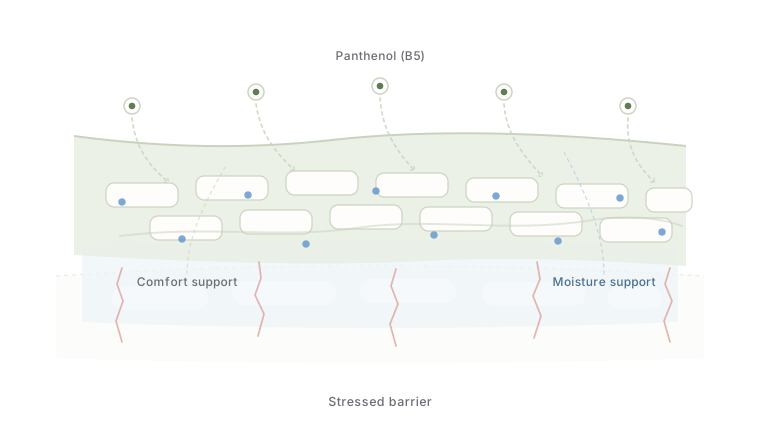
What makes panthenol distinctive is that it does not fit neatly into a single category. It acts partly as a humectant, holding water in the outer barrier. It acts partly as a comfort agent, associated with reduced redness and that tight, sore feeling that comes with stressed skin. And it supports the skin’s own recovery, which is why it appears so often in comfort-focused recovery formulas and in products used after stronger actives or cosmetic treatments — not just in everyday moisturisers.
That combination of roles is why you will often see panthenol listed alongside ceramides, glycerin, and allantoin in recovery-focused moisturisers. It complements them rather than competing with them.
Panthenol as comfort and moisture support
Why panthenol matters for sensitive and reactive skin
Reactive skin often goes through phases that are more than just dry. The skin can feel warm, slightly sore, stinging under products that usually sit fine, or visibly red after environmental triggers. These are the moments when a standard hydrator or lipid-rich cream is not quite enough — the skin needs to feel supported, not just moisturised.
Panthenol is especially relevant when skin feels:
- warm, red, or slightly sore without a clear cause
- stinging when normally well-tolerated products go on
- recovering after stronger actives, cosmetic treatments, or routine resets
- aggravated by weather, wind, or sun exposure
- in need of simple recovery support during a reactive phase
1. Comfort and recovery support
Unlike many ingredients marketed for ‘repair’, panthenol has a long history of use precisely because it can help stressed skin feel more comfortable sooner than slower structural barrier ingredients. It is the reason it appears in so many dermatologist-recommended moisturisers — including those used after stronger actives or cosmetic treatments — as a core ingredient.
2. Well suited to many reactive routines
Panthenol has an unusually low irritation profile and is usually very well tolerated. That makes it useful during phases when skin is rejecting more active or sensory formulas.
3. A strong team player
Panthenol combines well with almost every other Green List ingredient. It pairs naturally with ceramides for barrier support, with bisabolol and allantoin for comfort, and with humectants like glycerin and hyaluronic acid for hydration. Seeing panthenol in a formula is often a sign the whole product was built with reactive skin in mind.
What panthenol cannot do
Panthenol is comforting, but it is worth being clear about what it is not.
It is not a structural barrier repair ingredient. Panthenol supports the skin’s comfort and surface hydration, but it does not rebuild the lipid matrix the way ceramides, cholesterol, and fatty acids do. If the barrier is significantly compromised, panthenol will help the skin feel more comfortable while it recovers — but the actual structural repair depends on other ingredients.
It is not a treatment for underlying skin conditions. Panthenol can make rosacea-prone or eczema-prone skin feel more comfortable, but it does not address the medical drivers of those conditions. For chronic or persistent redness, inflammation, or flaring, a dermatologist-led approach is more appropriate than relying on a comfort ingredient.
And finally, while panthenol is often marketed with words like ‘healing’ or ‘repairing’, the effect on everyday skin is subtle and supportive rather than transformative. You should expect it to make a reactive day feel a little easier, not to permanently change your skin’s behaviour. That subtlety is part of its value — but worth knowing before expectations run ahead of reality.
Is panthenol good for sensitive skin? The Clarity Verdict
Panthenol is a foundational Green List ingredient and one of the most reliable comfort signals in our library. We value it most in moisturisers, recovery balms, serums designed for reactive phases, and formulas aimed at post-active care or recovery after stronger actives and cosmetic treatments.
If you are choosing between two otherwise similar products for sensitive skin, the presence of panthenol is usually a tiebreaker in the right direction. It is rarely the hero ingredient on the label, but it is often the reason the formula feels as good as it does on the skin.
How to use panthenol
Best For
- Red, warm skin
- Post-treatment recovery
- Stinging or itching
- All sensitive skin
Use When
- Morning and night
- During irritation phases
- After cleansing
- As an active buffer
Products featuring panthenol
Our ingredient-led product recommendations are being prepared and will be added soon.