
Understand your skin
Damaged skin barrier: what it means and which ingredients may help
What a weakened barrier means, the signs to look for, and which ingredient roles may help.
On this page
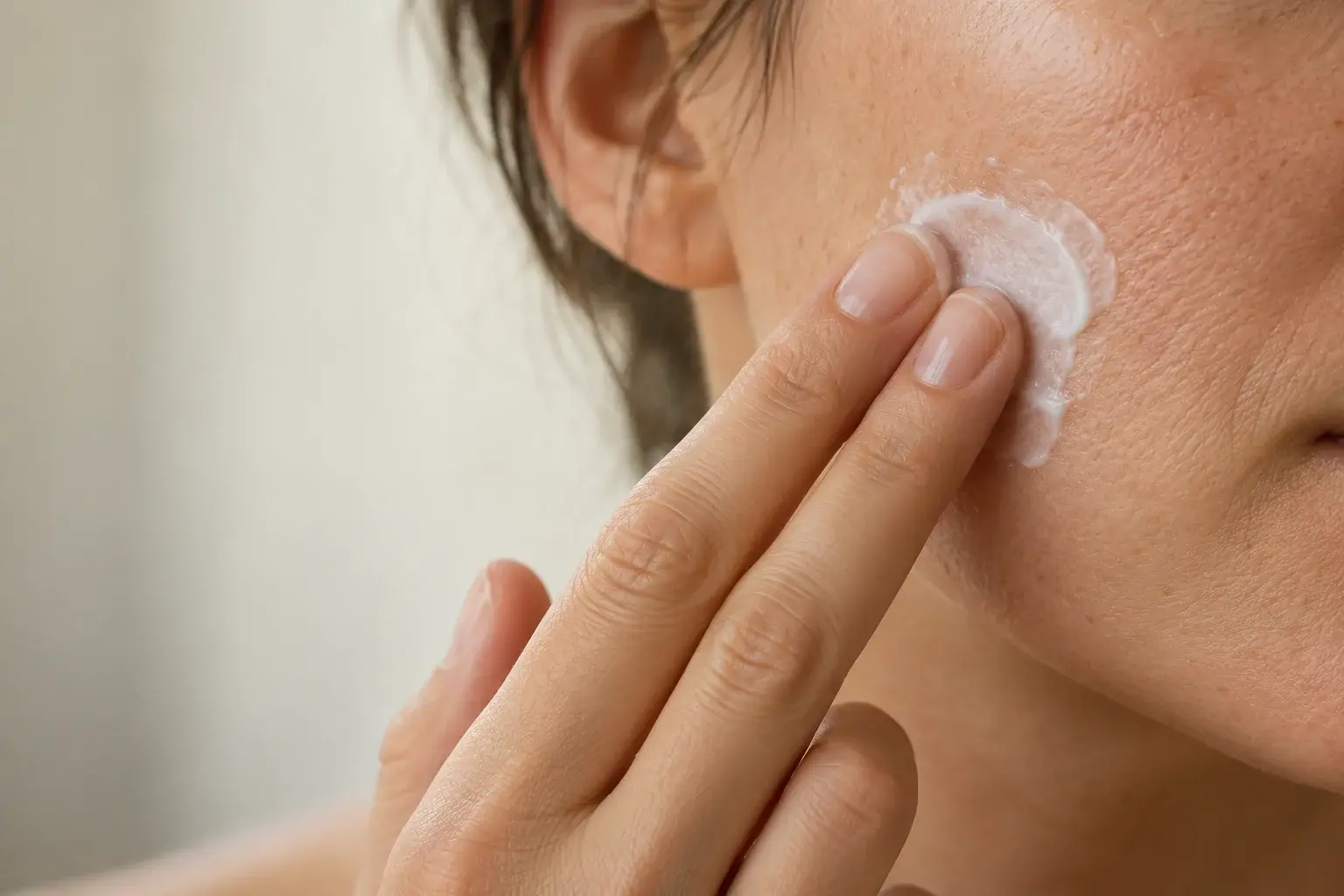
A damaged skin barrier means the outermost layer of your skin isn’t holding on to water or keeping irritants out as well as it should. It usually shows up as tightness, dryness or flaking, and as stinging from products that never used to bother you. This guide explains what the barrier is, what damage tends to look and feel like, and how to read an ingredient list for the kind of support that makes sense.
Clarity Summary
- Simplify your routine. Start by removing what’s wearing the barrier down: harsh or frequent cleansing, over-exfoliation and too many actives at once.
- Hold water in. Choose a moisturiser that helps skin hold water, with a humectant such as glycerin, and slows water loss, with an occlusive or rich emollient.
- Add support. Barrier lipids such as ceramides and cholesterol can help. Apply moisturiser to slightly damp skin.
- Give it time. Recovery time varies. If symptoms are severe or aren’t improving, get advice.
One distinction before we start. A damaged barrier and sensitive skin overlap, but they are not the same thing. Sensitive skin is defined by unpleasant sensations, such as stinging, burning or itching, in response to things that shouldn’t normally cause them, and the skin can look entirely normal (Misery et al., 2017). A weakened barrier is one common reason skin becomes reactive, but it isn’t the only one. Sensitive skin doesn’t automatically mean a damaged barrier.
What the skin barrier actually is
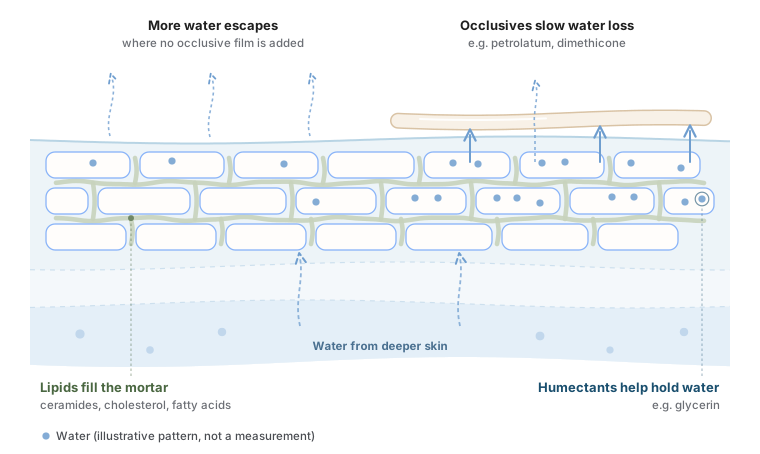
The barrier sits in the stratum corneum, the thin, outermost layer of the skin. The usual way to picture it is bricks and mortar:
- The bricks are flattened skin cells. Inside them sit natural moisturising factors, a mix of small water-attracting molecules that help the cells hold water.
- The mortar is a lipid layer filling the space between the cells. It’s made mainly of three types of lipid: ceramides, cholesterol and free fatty acids (Feingold, 2007).
That lipid mortar does most of the work of slowing water loss and keeping irritants out. When it’s disrupted, water escapes more easily and substances that would normally sit on the surface get further in. That’s why a damaged barrier tends to feel both dry and reactive at the same time.
What a damaged barrier tends to look and feel like
The signs people most often describe are:
- tightness, especially after cleansing
- dryness, rough patches or fine flaking
- itching or tingling
- stinging or burning when you apply products that were fine before, including plain moisturisers
- skin that looks dull or slightly red, or feels warm
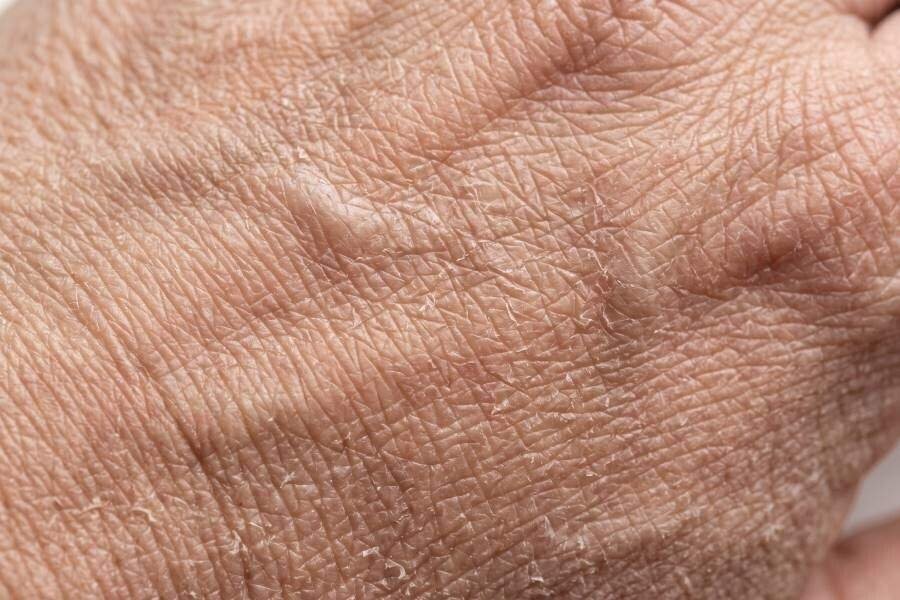
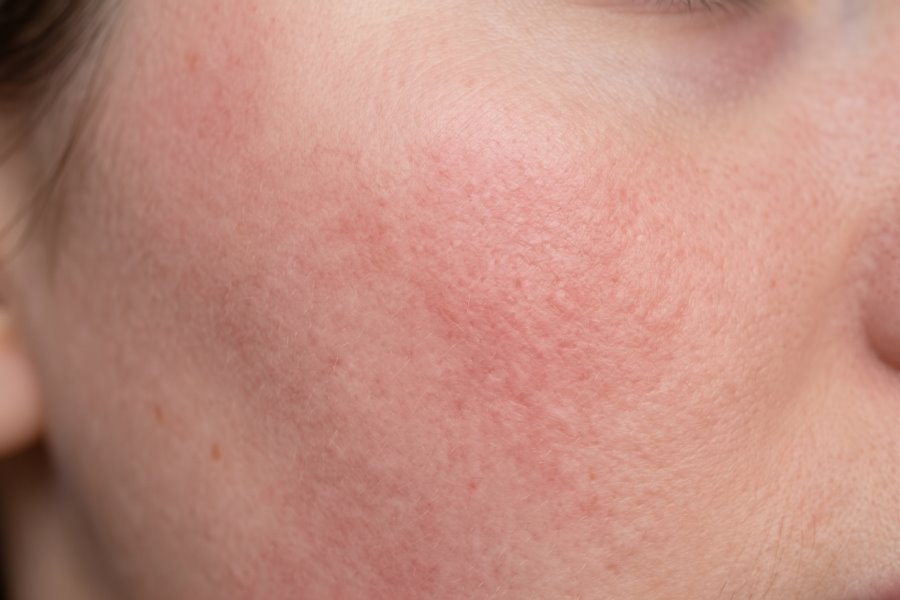
Dry skin isn’t only something you see: tightness, itch, stinging and tingling are all recognised parts of it (Purnamawati et al., 2017).
These signs are useful clues, but they’re not a diagnosis. The same symptoms can come from eczema, contact dermatitis, rosacea and other conditions that need proper assessment. If symptoms are severe, spreading, painful or not improving, see the section on when to get advice below.
Common causes in everyday routines
Barrier damage usually builds up from several small things rather than one dramatic event. The common culprits:
- Cleansing that’s harsher or more frequent than your skin needs. Cleansers vary a lot in how hard they are on the barrier, depending on the surfactants used, the pH and the overall formula (Ananthapadmanabhan et al., 2004). That’s why SLS and SLES are on our Red List. Washing more often than you need to, rubbing, and hot water all add to the load. A cleanser that leaves your skin feeling tight is worth reconsidering. Our guide to choosing a gentle cleanser explains what to look for.
- Too much exfoliation. Frequent scrubs, or acids used too often or at high strength, can remove more of the outer layer than it can replace. See our note on high-percentage acids.
- Too many actives at once. Retinoids, strong acids and vitamin C started together, or layered every night, are a classic route to an irritated, over-worked barrier.
- Weather and indoor air. Low temperatures and low humidity are well-recognised contributors to dry skin (Purnamawati et al., 2017), so cold, wind and central heating can all make things worse.
- Fragrance and other irritants. These aren’t always the root cause, but they’re more likely to sting once the barrier is already weakened.
What helps, part one: take things away
The most effective first step is usually subtraction, not addition. While your skin settles:
- Use a gentle cleanser that doesn’t leave your skin feeling tight, with lukewarm water, and pat dry rather than rubbing. Once a day is often enough; a water rinse in the morning may be all you need.
- Pause exfoliants, cosmetic retinoids and other strong actives. If a retinoid, acid or other treatment has been prescribed for you, don’t stop it on your own; ask your prescriber how to adjust it.
- Keep the routine short: cleanser, moisturiser and, in the daytime, SPF.
- Avoid introducing several new products at once, so you can tell what’s helping and what isn’t.
None of this is glamorous, but it removes the pressure that stops the barrier repairing itself.
What helps, part two: support the barrier by ingredient role
Once the pressure is off, a well-built moisturiser helps the barrier hold on to water while it recovers. It helps to think in roles rather than hero ingredients, because the useful formulas combine several. Our guide to choosing a moisturiser for sensitive skin explains how to compare formats and formulas.
Three roles that support the barrier
Humectants: drawing water in.
- Glycerin is one of the most established moisturising ingredients there is. It helps the outer layer attract and hold water, and research also links it to barrier function (Fluhr et al., 2008).
- Hyaluronic acid does a similar job.
Humectants are the base of most good moisturisers, but on their own they aren’t enough for a barrier that’s losing water quickly.
Barrier lipids: supporting the lipid structure.
- Ceramides, cholesterol and free fatty acids are the same three lipid types that make up the barrier’s mortar.
- Phytosphingosine is a ceramide-system partner often found alongside them.
These lipids are usually discussed together for a reason. Experimental research, including preliminary human results, shows that barrier recovery depends on the lipid mixture and ratios used (Man et al., 1996). That research doesn’t tell you how any particular cream will perform: brands rarely disclose amounts or ratios, and a label can’t show them.
So the lipids are best seen as complementary parts of a formula, not a checklist to count. The rest of the formula matters just as much. In dermatitis research, simple petrolatum-based emollients have done nearly as well as those containing skin-related lipids, although some studies suggest lipid mixtures may speed up barrier repair (Purnamawati et al., 2017).
Emollients and occlusives: softening and sealing.
- Emollients such as shea butter and squalane smooth and soften the surface.
- Occlusives form a film over the skin that slows water escaping. Petrolatum is the classic and most effective example. Dimethicone and other silicones also reduce water loss, though less strongly (Purnamawati et al., 2017).
Occlusive ingredients help slow water loss, complementing the water-binding action of humectants. That’s why most moisturisers combine the two (Purnamawati et al., 2017).
Comfort ingredients: helping skin feel settled.
- Panthenol, pro-vitamin B5, has a long record in moisturising and skin-recovery products (Proksch et al., 2017).
- The Oat Family: oat avenanthramides have shown anti-inflammatory and anti-itch activity in cell and mouse research (Sur et al., 2008).
- The Cica Family: centella and compounds such as madecassoside. In a small study of 25 healthy volunteers, creams and gels with centella extract applied to the forearms for four weeks improved skin hydration and reduced water loss (Ratz-Łyko et al., 2016).
These don’t replace the lipids and humectants, but they’re a sensible addition when skin feels hot, tight or itchy.
How you apply it matters too. Occlusives work best on skin that’s still slightly damp, so moisturise straight after washing and patting dry. Reapply when your skin feels tight: once to three times a day, depending on how dry it is (Purnamawati et al., 2017).
How to spot barrier support on a label
When you read an ingredient list, look for a formula that covers several roles rather than one headline ingredient:
- A humectant near the start, glycerin being the most common.
- Barrier lipids, for added support: a ceramide (Ceramide NP, AP or EOP on the label), cholesterol, or a fatty acid such as stearic acid. Many barrier formulas use them together.
- Something to slow water loss, such as petrolatum, dimethicone or a butter or oil.
- Optionally, a comfort ingredient such as panthenol, oat or centella.
What the label can’t tell you matters too:
- Ingredients at 1% or more are listed in descending order of weight. Below 1%, they can appear in any order, and colourants can be listed at the end in any order.
- The label doesn’t show where the 1% point falls. So a ceramide listed halfway down tells you it’s present, not how much.
- Ratios between ingredients are almost never disclosed.
- A long list of beneficial ingredients isn’t automatically better than a short, well-built one.
Three formulas worth looking at
These three screened products show different ways of putting the roles together. They’re examples, not a ranking:
CeraVe Moisturising Cream
CeraVe Moisturising Cream is a rich cream for face and body that combines ceramides and cholesterol with petrolatum and dimethicone.
- Lipids: three ceramides (NP, AP, EOP), cholesterol and phytosphingosine
- Water support: glycerin near the top, with sodium hyaluronate, part of the hyaluronic acid family
- Sealing: petrolatum and dimethicone
Byoma Moisturising Gel Cream
Byoma Moisturising Gel Cream brings the three lipid types together in a lighter format. Byoma describes the gel-cream as weightless and cooling.
- Lipids: Ceramide NP, cholesterol and fatty acids (stearic and oleic acid), plus phytosphingosine
- Also: glycerin, panthenol and niacinamide, which research links to higher ceramide levels in the skin (Purnamawati et al., 2017)
La Roche-Posay Cicaplast Baume B5+
La Roche-Posay Cicaplast Baume B5+ is a balm for dry patches, built around comfort and sealing rather than barrier lipids.
- Comfort: panthenol, centella leaf extract and madecassoside
- Water support and softening: glycerin and shea butter
- Sealing: dimethicone
We rechecked the published UK ingredient lists used for these three examples on 19 October 2026; all three met our screening criteria. They’re a reasonable starting point, but that doesn’t guarantee your skin will tolerate any of them. Our methodology explains how we screen. For more options, see the moisturisers and recovery balms and oils collections.
How long does a damaged skin barrier take to repair?
It depends on what caused the damage, how long it’s been going on and whether the cause has actually stopped. Recovery time varies, so there’s no single timetable that applies to everyone.
What does make a difference is consistency. A simplified routine and a well-built moisturiser used every day will do more than switching products every few days in search of a quick fix. If your skin is clearly improving, keep going. If it isn’t, or it’s getting worse, that’s a sign to get advice rather than add more products.
When to get advice
Speak to a pharmacist, GP or dermatologist if:
- symptoms are severe, painful, spreading or weeping
- your skin isn’t improving despite a simplified routine
- you suspect eczema, contact dermatitis, rosacea or an allergy
- you’re reacting to almost everything you apply
Skincare can support a recovering barrier, but it isn’t a substitute for proper assessment when something more is going on.
Sources
- Ananthapadmanabhan KP, Moore DJ, Subramanyan K, et al. (2004). Cleansing without compromise: the impact of cleansers on the skin barrier and the technology of mild cleansing. Dermatologic Therapy, 17(Suppl 1), 16–25. DOI: 10.1111/j.1396-0296.2004.04S1002.x.
- Feingold KR (2007). The role of epidermal lipids in cutaneous permeability barrier homeostasis. Journal of Lipid Research, 48(12), 2531–2546. DOI: 10.1194/jlr.R700013-JLR200.
- Fluhr JW, Darlenski R, Surber C (2008). Glycerol and the skin: holistic approach to its origin and functions. British Journal of Dermatology, 159(1), 23–34. DOI: 10.1111/j.1365-2133.2008.08643.x.
- Man MQ, Feingold KR, Thornfeldt CR, Elias PM (1996). Optimization of physiological lipid mixtures for barrier repair. Journal of Investigative Dermatology, 106(5), 1096–1101. DOI: 10.1111/1523-1747.ep12340135.
- Misery L, Ständer S, Szepietowski JC, et al. (2017). Definition of sensitive skin: an expert position paper from the Special Interest Group on Sensitive Skin of the International Forum for the Study of Itch. Acta Dermato-Venereologica, 97(1), 4–6. DOI: 10.2340/00015555-2397.
- Proksch E, de Bony R, Trapp S, Boudon S (2017). Topical use of dexpanthenol: a 70th anniversary article. Journal of Dermatological Treatment, 28(8), 766–773. DOI: 10.1080/09546634.2017.1325310.
- Purnamawati S, Indrastuti N, Danarti R, Saefudin T (2017). The role of moisturizers in addressing various kinds of dermatitis: a review. Clinical Medicine & Research, 15(3–4), 75–87. DOI: 10.3121/cmr.2017.1363.
- Ratz-Łyko A, Arct J, Pytkowska K (2016). Moisturizing and antiinflammatory properties of cosmetic formulations containing Centella asiatica extract. Indian Journal of Pharmaceutical Sciences, 78(1), 27–33. DOI: 10.4103/0250-474X.180247.
- Sur R, Nigam A, Grote D, Liebel F, Southall MD (2008). Avenanthramides, polyphenols from oats, exhibit anti-inflammatory and anti-itch activity. Archives of Dermatological Research, 300(10), 569–574. DOI: 10.1007/s00403-008-0858-x.
- Product ingredient lists rechecked 19 October 2026: CeraVe Moisturising Cream, L’Oréal UK professional shop; Byoma Moisturising Gel Cream, Cult Beauty; Cicaplast Baume B5+, La Roche-Posay UK. Byoma’s format description was checked against Byoma UK.