
The Oat Family
A traditionally used group of oat-derived ingredients trusted for comfort, itch relief, and long-term skin tolerance.
Before modern skincare had a word for ‘barrier’, grandmothers were filling muslin bags with oats and tying them into warm baths to settle itchy, reactive skin. That long kitchen-and-pharmacy tradition is one of the reasons oat-based ingredients have such an unusually durable reputation in dermatology — it is one of the very few ‘natural’ soothing stories where the evidence and the folklore actually agree.
On this page
The Clarity Summary
The Oat Family covers a group of ingredients derived from Avena sativa — the common oat — used in skincare primarily for their comfort, itch-support, and protective qualities. Oatmeal has been a dermatological staple for over half a century, with a well-established track record in clinical contexts including eczema-prone, post-procedure, and chronically reactive skin.
For Skincare Clarity, oats are one of the most reliably well-tolerated comfort ingredients in the library. They are often quieter on a label than cica, but the depth of their track record is what earns them family-page status alongside centella in the Soothing Superstars category.
What is the Oat Family?
The Oat Family in skincare refers to ingredients derived from Avena sativa, the cultivated oat grown worldwide for food and, for at least the last century, for topical use. On INCI lists oat-derived ingredients appear under several different names — Colloidal Oatmeal (the most recognised form), Avena Sativa Kernel Flour, Avena Sativa Kernel Extract, and occasionally Oat beta-glucan or Oat Kernel Oil — each referring to a slightly different preparation of the same plant.
What makes oats distinctive in a sensitive-skin context is that they offer multiple comfort-supporting mechanisms at once rather than a single isolated effect. Colloidal oatmeal, in particular, is FDA-recognised in the United States as an OTC skin-protectant active ingredient — a regulatory distinction that very few ‘natural’ ingredients hold. This gives oats something unusual for a plant-derived ingredient: a formal, decades-long position in clinical dermatology alongside more modern actives.
Unlike trend-led botanicals, the oat story is quiet, well-documented, and consistent. There are no dramatic origin stories, no ‘discovered by a skincare scientist in a remote village’ narratives. Just a long, unremarkable history of doing exactly what it claims to do on skin that needs comfort.
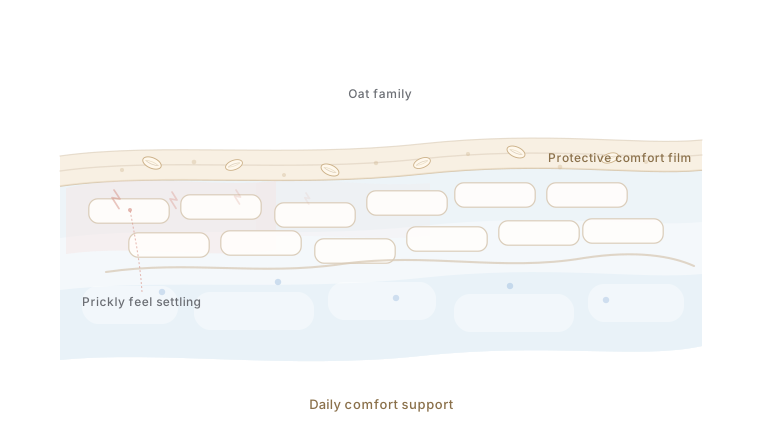
Oat Family as a protective comfort film
The compounds behind the comfort
Oats contain several groups of naturally occurring compounds that contribute to their skincare performance. Unlike the Cica Family, where specific isolated triterpenes are often listed as standalone ingredients, oat-derived compounds tend to work together as part of a full preparation rather than being individually isolated on labels. A few worth knowing:
- Avenanthramides — a group of polyphenolic compounds unique to oats, associated with comfort support and reduced surface redness. Oat’s most distinctive contribution to sensitive-skin care.
- Beta-glucan — a carbohydrate that forms a light, protective film on the skin surface and helps hold moisture. Sometimes also listed as a standalone ingredient (see beta-glucan in our library).
- Oat starches and proteins — contribute to the softening, skin-conditioning feel that colloidal oatmeal is known for.
- Oat lipids — small amounts of skin-compatible fatty acids that support surface comfort.
Common names on labels: Colloidal Oatmeal, Avena Sativa (Oat) Kernel Flour, Avena Sativa (Oat) Kernel Extract, Avena Sativa (Oat) Bran, Hydrolysed Oat Protein, Oat beta-glucan, Avenanthramides.
Seeing colloidal oatmeal or a combination of oat kernel flour with oat kernel extract is usually a positive signal — it suggests the formula is built around the full oat preparation rather than using a trace amount for marketing purposes.
Why oats matter for sensitive and reactive skin
Oat-based ingredients do a different job from cica, even though the two are often grouped together as ‘calming’. Where cica is associated with post-stress recovery and reactive-phase comfort, oats are more about sustained comfort and itch reduction — the slower, steadier work of keeping chronically reactive skin tolerable day after day.
Oats are especially useful when skin feels:
- itchy, prickly, or uncomfortable for no clear reason
- warm and tight without being visibly inflamed
- chronically reactive rather than episodically flared
- post-cleansing tender, particularly if simple washes have been leaving it sore
- in need of a gentle, long-term presence in the routine rather than an active intervention
The strongest scenario for oats is chronic reactive skin. If your skin is reactive most of the time — not just during flare-ups — oats are one of the most reliable ingredients for making daily routines feel more tolerable. They work gently and cumulatively for many reactive-skin users, but ‘oat’ should not be treated as allergy-proof — especially for users with known oat sensitivity, significant atopic history, or eczema-prone skin that has reacted to oat-containing products before.
They also suit simple, pared-back routines. For many readers rebuilding a routine after over-doing actives, or simplifying during a reactive period, a basic cleanser and moisturiser with colloidal oatmeal is a sensible, low-drama place to start — provided the formula is otherwise simple and fragrance-free.
Oats pair naturally with panthenol, ceramides, and glycerin — the quiet workhorses of reactive-skin care rather than the headline actives.
Cica vs oats — when to reach for which
Because both ingredients anchor the Soothing Superstars category, it is worth being specific about how they differ.
Cica tends to be the sharper tool for acute situations — a visible flare, post-procedure recovery, skin that is warm or stinging in the moment. It has a stronger association with active-calm work and is often used in more technical formulas.
Oats tend to be the better long-term choice for everyday tolerance and itch-prone comfort. They are gentler, more cumulative in effect, and usually more appropriate for skin that is reactive much of the time rather than occasionally.
Many of the best reactive-skin formulas include both. They are complementary, not competitive — cica for post-stress recovery and acute calming, oats for sustained daily comfort and itch reduction. A product that pairs colloidal oatmeal with madecassoside is often a more complete soothing formula than one relying on either ingredient alone.
There is also a third comfort ingredient worth knowing about alongside these two: ectoin, which sits in a different space again — less about calming what is already reactive, and more about supporting skin against cumulative environmental stress. A routine can comfortably include all three, each covering a slightly different part of the comfort picture.
What the Oat Family cannot do
Oats are among the most well-tolerated ingredients in skincare, but expectations still need to sit in proportion.
Oats are not an anti-inflammatory treatment in a medical sense. They are comfort-supporting and itch-reducing, which is useful for mild-to-moderate reactive skin. But for diagnosed inflammatory conditions — eczema, dermatitis, psoriasis — oat-based skincare can support comfort alongside medical treatment, not replace it. This distinction matters because oat products are sometimes marketed in ways that blur it.
Colloidal oatmeal is not a cure for chronic itchy skin. It reduces itch and surface discomfort, often meaningfully, but it does not address the underlying causes of persistent itchy skin conditions. For readers dealing with chronic itching that is not responding to basic comfort care, the next step is dermatological assessment, not a higher-concentration oat product.
‘Oat’ on a label can mean a lot of different things. An oat-based cleanser with colloidal oatmeal in the top five ingredients is a different product from a moisturiser with trace amounts of oat kernel extract near the bottom of the list. The word itself is not a guarantee of meaningful concentration, which is worth remembering when the marketing leans heavily on the ingredient’s reputation.
And finally, a genuine oat allergy or oat sensitisation is uncommon, but it does exist. It is especially worth considering if you already react to oat-containing foods, have a strong atopic history, or have previously reacted to oat-based skincare — particularly where the barrier is compromised. Patch testing remains sensible with any new product, including ingredients with a strong comfort track record.
Is the Oat Family good for sensitive skin? The Clarity Verdict
The Oat Family is a foundational Green List category and one of the two anchors of Soothing Superstars alongside cica. We value oats most in everyday moisturisers, cleansers for reactive skin, and recovery products aimed at itch-prone or chronically uncomfortable skin.
If you are building a routine for consistently reactive skin — not just managing occasional flare-ups — colloidal oatmeal is one of the most dependable places to start. It is not flashy, it is not trending, and it does not carry the marketing edge of newer botanicals. But for the specific job of keeping reactive skin quietly comfortable day after day, there are very few ingredients with a longer or more trustworthy track record.
How to use oats
Best For
- Itchy skin
- Tight, warm skin
- Dry-reactive skin
- Comfort-first routines
Use When
- Morning and night
- During irritation phases
- In simple routines
- After cleansing stress
Products featuring oats
Our ingredient-led product recommendations are being prepared and will be added soon.