
Decyl glucoside
A mild non-ionic surfactant made from plant-derived glucose and fatty alcohols, often one of the mildest cleansing options for highly reactive skin.
For many reactive-skin users, cocamidopropyl betaine is the right cleansing surfactant. For some, it is not — the rare allergy is real, the symptoms can be confusing, and the experience of unexplained reactions to ‘gentle’ cleansers leaves users wary of the whole category. Decyl glucoside is the most reasonable next option for that group, and the natural starting point for anyone whose reactive skin needs the gentlest possible cleansing step.
On this page
The Clarity Summary
Decyl glucoside is a non-ionic surfactant derived from a combination of corn starch and coconut, used in some of the gentlest cleansing formulations available. Where cocamidopropyl betaine is the workhorse default of sensitive-skin cleansing, decyl glucoside is the gentler-still alternative — slightly less foaming, slightly milder in cleansing action, and considerably less likely to cause the kind of contact reactions associated with other surfactants.
For Skincare Clarity, decyl glucoside is a Green List ingredient and the cleansing-surfactant equivalent of taking one step further down the sensitivity ladder. It is not the right choice for every routine — its gentleness can feel underwhelming for users with oilier skin or heavier daily makeup — but for users with chronically reactive skin or specific cocamidopropyl betaine sensitivity, it is often the only mild surfactant that works.
What is decyl glucoside?
Decyl glucoside is a mild plant-based surfactant produced by combining decyl alcohol (derived from coconut and palm oils) with glucose (derived from corn starch). The chemistry is straightforward: a fatty alcohol joined to a sugar, producing a surfactant molecule that cleanses without the harshness of traditional foaming agents.
On INCI lists it appears under that single name — Decyl Glucoside. Unlike many ingredients in the library, there are no commonly used variants or derivatives to decode; the form on the label is the form in the bottle.
What makes decyl glucoside distinctive among surfactants is that it is non-ionic — meaning it does not carry an electrical charge in solution. Most surfactants do, and that charge contributes to both their cleansing power and their potential to disrupt the skin barrier. Non-ionic surfactants like decyl glucoside cleanse through a different mechanism that is gentler on the barrier’s lipid structure, with a lower irritation profile than even amphoteric surfactants like cocamidopropyl betaine.
The trade-off is that decyl glucoside produces less foam and a less obviously ‘cleansing’ sensation than cocamidopropyl betaine. For users used to traditional foaming cleansers, this can initially feel like the cleanser is not really working — even when it is doing exactly the gentle job a reactive-skin routine needs.
Decyl glucoside also avoids the CAPB-specific DMAPA and amidoamine manufacturing-intermediate issue. That does not make it allergy-proof: alkyl glucosides, including decyl and lauryl glucosides, are recognised contact allergens, the American Contact Dermatitis Society named alkyl glucosides its Allergen of the Year in 2017, and decyl glucoside has been included in the North American Contact Dermatitis Group standard patch-test series. The practical advantage is that decyl glucoside is a very mild cleansing surfactant, not that it is incapable of causing reactions.
Decyl glucoside as gentle rinse-off cleansing support
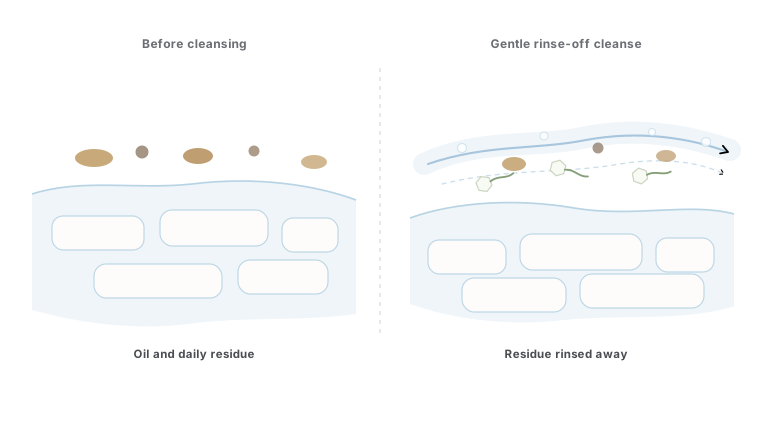
Why decyl glucoside matters for sensitive and reactive skin
Decyl glucoside fills a specific gap: the cleansing surfactant for users who cannot tolerate the standard mild alternatives. This is a smaller group than the cocamidopropyl betaine user base, but for the readers in it, decyl glucoside is often the difference between a workable cleansing routine and one that quietly causes problems.
Decyl glucoside is especially relevant when:
- you have reacted to cocamidopropyl betaine-based cleansers with unexplained tightness, itching, or low-grade redness
- your skin is in a chronically reactive phase where even standard mild surfactants feel slightly stripping
- you want a lower-irritation cleansing option, even at the cost of less foam and a milder cleansing sensation
- you are rebuilding a routine after a barrier compromise and want minimal cleansing intervention
The strongest honest case for decyl glucoside is as the gentlest workable cleansing surfactant for reactive skin. Not the gentlest imaginable — true cleansing without any active ingredient is gentler still, but it does not actually clean the skin. Decyl glucoside is the lower bound of ‘still doing the cleansing job’ for sensitive users, which is exactly what some readers need.
It pairs naturally with glycerin for post-wash comfort, with panthenol for additional barrier support during the cleansing step, and with allantoin for surface comfort. Decyl glucoside-based cleansers often appear in Oat Family-led formulas as part of the broader gentleness positioning.
Who benefits most
Decyl glucoside is not the right surfactant for every user, and being specific helps.
Users who have reacted to cocamidopropyl betaine. This is the clearest case. If gentle cleansers have been causing unexplained reactions and cocamidopropyl betaine appears on the labels of those cleansers, switching to a decyl-glucoside-based formula often resolves the issue cleanly.
Users with chronically reactive or barrier-compromised skin. For readers whose skin is consistently sensitive — not just during occasional flares — decyl glucoside is often a more sustainable cleansing surfactant than cocamidopropyl betaine, simply because the lower irritation profile keeps small daily exposures from accumulating into a problem.
Users with normal-to-combination reactive skin. Decyl glucoside works fine here, but cocamidopropyl betaine usually works equally well and produces a more cosmetically satisfying cleansing experience. For this group, decyl glucoside is a reasonable choice rather than a necessary one.
Users with oily skin or who wear heavy daily makeup. Decyl glucoside’s gentleness becomes a limitation. The cleansing action may not be sufficient to remove sebum buildup or to clear a full day of foundation and SPF. For these users, a cocamidopropyl betaine-based cleanser — or a two-step routine with an oil-based first cleanser — is usually the better starting point.
The point worth naming: decyl glucoside is the right answer for some users and overcautious for others. Knowing which group you fall into is the most useful thing this page can help with.
Is decyl glucoside good for sensitive skin? The Clarity Verdict
Decyl glucoside is a Green List ingredient and the gentlest cleansing surfactant in the library. We value it most in cleansers aimed at chronically reactive users, in formulas built around oat or other comfort-led ingredients, and as the natural alternative to cocamidopropyl betaine for users who cannot use it.
If cocamidopropyl betaine has caused unexplained reactions for you, or if your skin needs the lowest-intervention cleansing step available, decyl glucoside is the most reasonable choice. If your skin tolerates cocamidopropyl betaine fine and you want a more satisfying cleansing experience, a cocamidopropyl-betaine-based formula remains the more practical default. The two together cover the full sensitive-skin cleansing spectrum, and most well-built routines will use one or the other rather than needing both.
How to use decyl glucoside
Best For
- Sensitive cleansing
- Low-irritation wash formulas
- Plant-based surfactant users
- Everyday barrier-first routines
Use When
- Morning or evening
- In gentle cleansers
- During routine resets
- When foaming cleansers feel too strong
Products featuring decyl glucoside
Our ingredient-led product recommendations are being prepared and will be added soon.