
Alcohol Denat and other drying alcohols
A small family of low-molecular-weight solvents — and not the same thing as the emollient fatty alcohols also found on cosmetic labels.
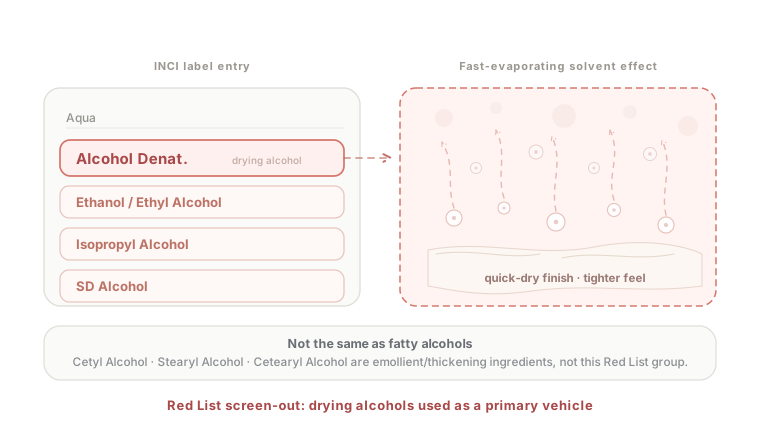
Drying alcohols are a small family of low-molecular-weight solvents — Alcohol Denat, Ethanol, Ethyl Alcohol, Isopropyl Alcohol, SD Alcohol — used in skincare as quick-evaporating vehicles, astringents, and penetration enhancers. Not all alcohols on a label are drying. Fatty alcohols like Cetyl Alcohol and Stearyl Alcohol are emollient waxes, completely different in function and not on this Red List. The drying alcohols are what this page is about, and what reactive skin tends to feel after using them.
The Red List Verdict
Drying alcohols can extract and disturb the lipids that help hold the skin barrier together. At low percentages — buried near the bottom of an INCI list, used as a processing aid or part of a preservative system — they are largely a non-issue for many users. The exclusion is specific: when a drying alcohol sits high on the INCI list as a primary vehicle — often suggesting a substantial vehicle-level concentration — it can disrupt the lipid barrier, increase transepidermal water loss, and leave reactive skin feeling tight, stripped, and prone to flaring.
For a curation built around easily irritated skin, that risk profile is not worth carrying when alcohol-free vehicles deliver the same lightweight, fast-absorbing feel through humectants and silicones rather than through evaporation.
What are drying alcohols?
Drying alcohols are small, volatile organic solvents that evaporate rapidly when applied to skin. The most common in cosmetics are ethanol (also labelled as Ethyl Alcohol, Alcohol, or Alcohol Denat), isopropyl alcohol (also called isopropanol or 2-propanol), and SD Alcohol (Specially Denatured Alcohol — usually ethanol with a small amount of bittering agent added to make it undrinkable, allowing it to be sold without alcohol duty).
In skincare formulas, drying alcohols do several things at once:
- Solvent. They dissolve ingredients that water alone will not, allowing certain actives to be incorporated into a stable formula.
- Vehicle and texture modifier. They give a formula that quick-drying, weightless feel — used heavily in toners, ‘treatment’ essences, lightweight serums, and some sunscreens.
- Penetration enhancer. They temporarily increase the permeability of the skin barrier, which can help other actives penetrate more deeply — a benefit in some clinical contexts but a barrier-disrupting mechanism in everyday leave-on use.
- Astringent. They produce a tightening sensation often interpreted by users as ‘clean’ or ‘deep cleansing’ feedback.
- Preservative co-system. At sufficient concentrations, alcohol contributes to microbial control and can reduce or eliminate the need for additional preservatives.
That last point matters: a small amount of alcohol low on an INCI list is often doing preservative work, not vehicle work, and is generally not the same concern as alcohol used as a primary base.
Drying alcohols as a quick-dry solvent effect
What about fatty alcohols?
This is the most common point of confusion in the alcohol-on-labels conversation. Fatty alcohols — Cetyl Alcohol, Stearyl Alcohol, Cetearyl Alcohol, Behenyl Alcohol, Lauryl Alcohol — are not drying. They are long-chain alcohols used in formulas as emollient waxes, thickeners, and emulsion stabilisers. They feel like a soft wax or solid butter at room temperature, not a solvent. In most skincare contexts, they support softness, texture, and barrier comfort rather than disrupting it.
If ‘alcohol’ on an INCI is preceded by Cetyl, Stearyl, Cetearyl, Behenyl, or Lauryl, it is a fatty alcohol and not on this Red List. Treating all ‘alcohols’ as equivalent is one of the most common errors in label-reading, and one of the easiest to fix.
A separate note on two ingredients sometimes confused with drying alcohols: Phenoxyethanol is a glycol ether preservative, not an alcohol in the drying-solvent sense; it is widely used in well-tolerated formulas. Benzyl Alcohol is a different compound again, often used as a preservative or fragrance component. It is also a declared fragrance allergen, so it should be assessed under fragrance/allergen logic, not drying-alcohol logic.
Why drying alcohols are on our Red List
The mechanism is well characterised. Drying alcohols can extract intercellular lipids — the ceramides, cholesterol, and fatty acids that hold the stratum corneum together — and disturb the barrier environment as they themselves evaporate. The result is measurable barrier disruption: increased transepidermal water loss, reduced skin hydration, and over repeated use the kind of cumulative fragility that reactive skin is least equipped to absorb.
The effect is dose- and time-dependent. Low concentrations — for example, alcohol used as a processing aid, preservative co-system, or trace solvent — are usually a very different concern from alcohol used as the main vehicle. The higher-risk scenario is repeated leave-on use where alcohol appears near the top of the INCI list and evaporates quickly after application, taking the formula’s lightweight feel with it.
For reactive or compromised skin, the threshold is lower. The barrier is already at a reduced baseline, and drying alcohols reliably push it further. Users with rosacea, eczema-prone skin, post-procedure skin, or simply skin that has become reactive after a flare are the population for whom the cumulative cost of a high-alcohol vehicle is most clearly not worth the lightweight texture it delivers.
A worked example helps: a ‘clarifying’ or ‘treatment’ toner with Alcohol Denat as the second ingredient on the INCI is built around alcohol as its primary vehicle — often suggesting a substantial vehicle-level concentration, although exact percentages cannot be read from position alone. A serum with Alcohol Denat as the fifteenth ingredient, after a long list of humectants and actives, is using it as a processing aid. The first product is the kind of formula this Red List is built to flag. The second is closer to a non-issue.
What to look for on a label
On a UK INCI list, drying alcohols appear under several names:
- Alcohol Denat — the most common in UK and EU cosmetics
- Alcohol — when listed alone, this almost always means ethanol
- Ethanol / Ethyl Alcohol
- Isopropyl Alcohol / Isopropanol
- SD Alcohol 40 / SD Alcohol 40-B — US-style naming, sometimes seen on imports
The single most useful signal is position on the INCI list. INCI lists are ordered by descending weight at the time of addition, with ingredients present below 1% allowed to appear in any order after ingredients at 1% or more. An alcohol listed within the first three to five ingredients is therefore a useful sign that it is playing a major vehicle role, but exact percentages cannot be read from position alone. An alcohol listed below the first ten ingredients, especially toward the end of the list, indicates a minor functional role and is rarely the same concern.
Categories where high-position drying alcohols are most common: ‘clarifying’ or ‘treatment’ toners, K-beauty-style essences with quick-absorbing claims, lightweight gel serums, some chemical sunscreens (where alcohol can carry UV filters and produce a non-greasy finish), and some hair products. Categories where they are rarely a primary vehicle: rich moisturisers, balms, cleansing oils, mineral sunscreens.
What to use instead
For reactive skin, the goal is the lightweight, fast-absorbing feel that drying alcohols deliver — without the barrier cost.
The strongest substitutes are humectant-led hydrating toners and essences built around glycerin, Hyaluronic Acid Family ingredients, and niacinamide, often paired with calming ingredients like Oat Family extracts, panthenol, or bisabolol. For the ‘fast absorbing oil’ feel without the dryness, squalane does the same sensory job through a completely different mechanism — a non-volatile, barrier-compatible lipid rather than an evaporating solvent.
A reactive-skin routine very rarely needs alcohol-led textures to function well. It almost always benefits from removing them.