
Titanium dioxide
A mineral sunscreen filter that complements zinc oxide, most often seen as part of mixed-mineral SPF formulations.
If you have read an INCI list on a mineral sunscreen lately, you have probably seen titanium dioxide listed alongside zinc oxide — sometimes in equal proportion, sometimes in smaller amounts. The question reasonable readers end up asking is simple: if zinc oxide already offers broad-spectrum protection, why bother with a second mineral filter? The honest answer is that titanium dioxide brings a few specific strengths zinc oxide does not, and the combination is often better than either alone.
On this page
The Clarity Summary
Titanium dioxide is the second mineral sunscreen filter widely used in modern formulations, typically alongside zinc oxide rather than as a standalone choice. It is particularly strong in the UVB band — where zinc oxide is comparatively weaker — which is why the two are so commonly combined. On its own, titanium dioxide offers partial protection. In a mixed-mineral formula with zinc oxide, it contributes meaningfully to both the protective performance and the cosmetic finish.
For Skincare Clarity, titanium dioxide is a legitimate Green List ingredient best understood as zinc oxide’s formulation partner rather than a replacement for it.
What is titanium dioxide?
Titanium dioxide is a mineral compound — titanium combined with oxygen — widely used across industries as a white pigment and UV-absorbing material. In skincare, its primary role is as a sunscreen filter, where it works through a similar combination of mechanisms as zinc oxide: absorbing UV radiation and scattering some of it away from the skin surface.
On INCI lists, titanium dioxide appears under a few forms. Titanium Dioxide is the standard listing. Non-nano titanium dioxide describes larger particles above 100 nanometres, which tend to leave a more visible white cast. Nano titanium dioxide describes smaller particles used for better cosmetic finish. Coated titanium dioxide refers to particles treated with inert coatings (silica, alumina, or similar) to improve formulation stability and reduce potential interactions with other ingredients. As with zinc oxide, these are formulation distinctions rather than meaningful performance differences for most sensitive-skin users.
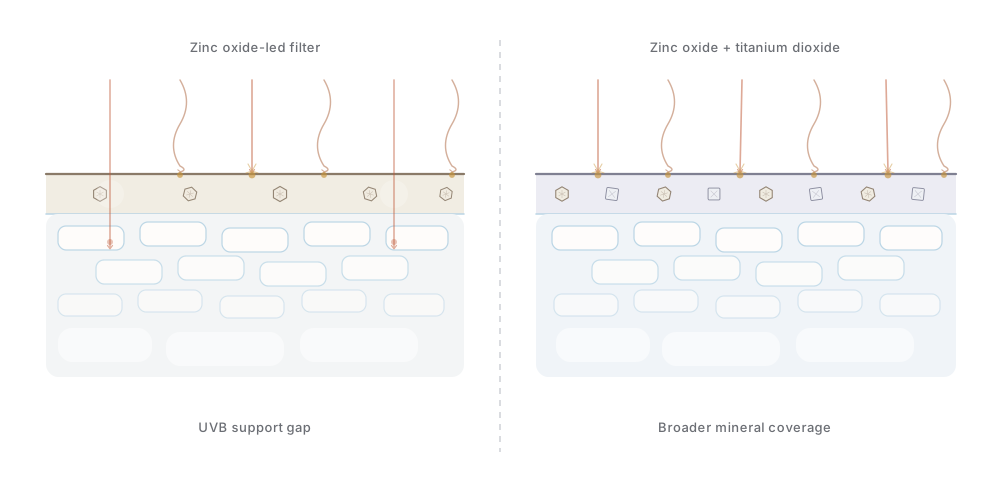
What makes titanium dioxide distinctive within the mineral-filter category is its protection profile. It offers strong protection in the UVB band — the shorter wavelengths responsible for burning and more acute surface damage — but weaker protection in the longer UVA range, where zinc oxide excels. This is the opposite of zinc oxide’s profile, and it is the primary reason the two are so often combined in mixed-mineral formulations: titanium dioxide carries the UVB side, zinc oxide carries the UVA side, and the combined filter covers the full spectrum more reliably than either alone.
Titanium dioxide also tends to produce a slightly less pronounced white cast than equivalent zinc oxide at the same particle size and concentration, which contributes to cosmetic elegance in well-formulated products.
Titanium dioxide as a mineral filter partner
Why titanium dioxide matters for sensitive and reactive skin
Like zinc oxide, titanium dioxide has an unusually clean tolerance profile. It is one of the most consistently well-tolerated SPF ingredients available, and for reactive-skin users who cannot tolerate chemical filters, titanium dioxide in a mixed-mineral formula is part of the answer.
Titanium dioxide is especially relevant when:
- you are reading a mixed-mineral SPF label and want to understand what each filter contributes
- your skin has rejected chemical filters and needs a complete mineral alternative
- you are comparing straight-zinc formulations with zinc-plus-titanium combinations
The honest case for titanium dioxide is that the mixed-mineral approach usually outperforms either filter alone. A well-formulated SPF combining zinc oxide and titanium dioxide tends to offer more reliable broad-spectrum protection, a more cosmetically elegant finish, and often a higher overall SPF rating than a zinc-only product of comparable quality. This is not always the case — some zinc-only formulations are excellent — but the combined approach is the more common route to a strong mineral SPF.
Titanium dioxide pairs cleanly with the rest of a sensitive-skin routine for the same reasons zinc oxide does: minimal interaction risk, no absorption concerns, consistent tolerance across reactive users. It works alongside the routine foundations — ceramides, glycerin, panthenol — and with actives like niacinamide and the Vitamin C Defence System without creating tolerance complications.
Zinc oxide or titanium dioxide — the real answer
Because readers comparing SPF labels naturally end up asking which filter to prioritise, being direct about the answer matters.
For most reactive-skin users, the answer is ‘both’. The mixed-mineral approach — a formula containing both zinc oxide and titanium dioxide — is the stronger choice for sensitive users in most scenarios. Each filter compensates for the other’s weaker band. Each contributes to the cosmetic finish. And products using both filters can typically achieve higher SPF ratings with better UVA protection than single-filter alternatives.
When zinc-only is the better choice: if you have specific tolerance concerns with titanium dioxide (uncommon but not unheard of), if you want the simplest possible SPF formulation for reactive skin in an active phase, or if you have found a particular zinc-only product that your skin consistently tolerates. Zinc oxide alone can deliver full broad-spectrum protection in a well-built formula, and for some users this is the right choice.
When titanium-only is the better choice: almost never, for sensitive skin. Titanium dioxide’s weaker UVA coverage means a titanium-only SPF typically does not offer the UVA protection reactive-ageing skin particularly needs. Products that rely primarily on titanium dioxide without significant zinc oxide support are usually formulations aimed at different use cases (mineral makeup, tinted products without full SPF claims) rather than serious daily UV protection.
For routine-building, the practical framing is: look for mixed-mineral formulas first, zinc-only formulas as the reasonable alternative, titanium-only as a distant third for most reactive-skin contexts.
What it cannot do
Titanium dioxide has specific limits worth naming.
Titanium dioxide alone is not enough for strong UVA protection. This is the single most important point on the page. For readers seeking genuine broad-spectrum coverage, a titanium-only formula is an incomplete choice. Check for zinc oxide, avobenzone (if chemical filters are acceptable), or other UVA-strong filters alongside titanium dioxide for a complete protection profile.
The white cast is not eliminated, only reduced. Modern titanium dioxide formulations handle the cast better than zinc oxide does, but ‘better’ is relative. Deeper skin tones still need to evaluate the cast carefully, and iron oxides remain the most practical route to cosmetically acceptable mineral SPF for users in that range. The titanium-dioxide-is-more-elegant framing is sometimes used to suggest mineral SPF has solved its cosmetic challenges; the reality is more nuanced.
Nano-particle debates exist for titanium dioxide as they do for zinc oxide. Regulatory authorities have reviewed the evidence and consistently concluded that current nano-titanium-dioxide skincare formulations are safe — the particles do not penetrate healthy skin, and the industry’s formulation standards address the relevant concerns. This is worth mentioning because the debate appears periodically in media coverage; the scientific consensus has not shifted in response.
And finally, titanium dioxide is not a replacement for zinc oxide when a straightforward reactive-skin SPF is the goal. The library treats zinc oxide as the foundational filter and titanium dioxide as the partner; that order reflects their relative contribution to what reactive-skin users specifically need from an SPF.
Is titanium dioxide good for sensitive skin? The Clarity Verdict
Titanium dioxide is a legitimate Green List ingredient with a specific, useful role: it is the mineral filter partner that strengthens mixed-mineral SPF formulations without compromising tolerance. We value it most when it appears alongside zinc oxide in well-built sensitive-skin sunscreens, where the combined filter system usually outperforms either ingredient alone.
If you are comparing two mineral SPFs and one includes both zinc oxide and titanium dioxide while the other uses zinc oxide alone, the mixed-mineral option is usually the stronger choice — better broad-spectrum coverage, often higher SPF ratings, and frequently a more cosmetically elegant finish. If you are considering a titanium-only SPF, look closely at the UVA protection rating before committing. For reactive skin, strong UVA protection is non-negotiable, and titanium dioxide alone does not quite deliver it.
How to use titanium dioxide
Best For
- Sensitive SPF routines
- Mineral-filter users
- Lightweight daily protection
- High-tolerance formulas
Use When
- Every morning
- In everyday city wear
- When a softer mineral finish is preferred
- Alongside a broader mineral filter blend
Products featuring titanium dioxide
Our ingredient-led product recommendations are being prepared and will be added soon.