
Azelaic acid
A dermatology-staple active that clarifies skin, reduces redness, and evens tone — unusually well suited to reactive skin.
If your skin is reactive and prone to blemishes, redness, or uneven tone, the standard advice tends to fail you. Stronger exfoliating acids irritate the reactivity. Benzoyl peroxide aggravates the barrier. Retinoids can be too much during reactive phases. Azelaic acid is one of the few performing actives that addresses this exact skin type without the usual trade-off — though it can still feel too active for some reactive users.
On this page
The Clarity Summary
Azelaic acid has a long dermatological track record as a clarifying, redness-reducing, and tone-evening active. Unlike most ingredients that do any one of those jobs, azelaic acid does all three at a meaningful standard, and it does them on skin that often cannot tolerate the more aggressive alternatives.
For Skincare Clarity, azelaic acid is a Gentle Actives specialist. Where niacinamide is the foundational all-rounder — the first active most reactive-skin users should try — azelaic acid is the more targeted next step when specific concerns need more direct work.
What is azelaic acid?
Azelaic acid is a naturally occurring dicarboxylic acid found in grains such as wheat, rye, and barley, and also produced by yeast that lives naturally on the skin. On INCI lists it appears as Azelaic Acid, and occasionally in derivative forms such as Potassium Azeloyl Diglycinate or Azeloyl Glycine, which are milder, water-soluble versions used in gentler formulations.
The original dermatological use of azelaic acid was in prescription treatments for rosacea and acne, typically at 15–20% concentrations. In cosmetic skincare, it more commonly appears at 5–10%, which produces more modest but useful effects on reactive skin. The lower cosmetic strength is often the right level for sensitive users who would find the prescription concentration too aggressive.
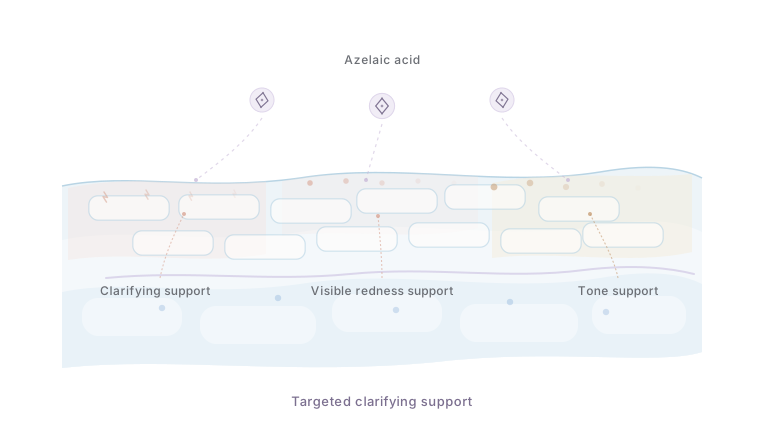
What makes azelaic acid distinctive among performance actives is that it works on multiple concerns at once without the usual trade-offs. It has clarifying effects on blemish-prone skin, it reduces visible redness, and it supports more even skin tone over time — and because its mechanism is different from AHA-style exfoliation, it does this work without the barrier stress that glycolic or salicylic acid can cause. For reactive skin that is used to choosing between ‘clarifying but harsh’ and ‘gentle but passive’, azelaic acid occupies a different territory.
Azelaic acid as clarifying skin support
Why azelaic acid matters for sensitive and reactive skin
The most honest case for azelaic acid is that it is the active most suited to reactive combination skin — the skin type where many active routines break down. It is for users who get blemishes but cannot tolerate strong spot treatments, who have background redness that brightening actives tend to worsen, and who want real performance without the fragility-inducing consequences of more aggressive ingredients.
Azelaic acid is especially useful when skin feels:
- reactive and blemish-prone at the same time
- persistently flushed, warm, or redness-leaning
- uneven in tone after blemishes clear
- unsettled by stronger acids or benzoyl peroxide
The strongest scenario is reactive combination skin with post-inflammatory marks. This is the territory azelaic acid was essentially built for — ingredients that address only one of clarifying or tone-evening either leave the other problem behind or aggravate the reactivity in solving it. Azelaic acid’s combination of actions, delivered gently, is unusually well matched to this specific skin type.
It also works well alongside niacinamide and panthenol in a routine. Niacinamide handles the foundational barrier-and-tone support, azelaic acid does the more targeted clarifying and redness work, and panthenol supports the comfort layer underneath. For users whose reactive skin has specific concerns beyond what niacinamide alone addresses, azelaic acid is usually the next step — not a competing choice.
What it cannot do
Azelaic acid is useful, but expectations still need proportion.
It is not a fast-acting ingredient. Visible clarifying and tone-evening effects typically show up over six to twelve weeks of consistent use, not days. Marketing that implies faster results oversells the ingredient. For readers expecting a two-week transformation, azelaic acid will disappoint. For readers willing to commit to steady use, it is one of the more reliable performance ingredients in sensitive skincare.
It is not a replacement for prescription-strength formulations in clinical contexts. If you have diagnosed rosacea or moderate-to-severe acne, cosmetic azelaic acid can be part of your routine, but it is not a substitute for dermatologist-prescribed treatment. The 15–20% prescription concentrations do clinical work that cosmetic formulas are not designed to match.
Some users experience mild tingling or warmth during the first few weeks. This is usually transient and not a sign of damage, but it is worth knowing — particularly for readers used to ingredients that produce no sensation at all. Starting with a 5–7% product and building up tends to minimise this, as does pairing with well-tolerated barrier-supporting ingredients in the rest of the routine.
And finally, azelaic acid does not do much for barrier repair directly. It is a performance active that sits inside a barrier-supportive routine; it is not itself a barrier ingredient. For compromised barriers, ceramides, glycerin, and panthenol remain the primary tools. Azelaic acid works best when those foundations are already in place.
Is azelaic acid good for sensitive skin? The Clarity Verdict
Azelaic acid is a Green List specialist and one of the most useful actives for the specific reactive skin type that struggles with other performance ingredients. We value it most in serums and treatments aimed at users whose skin is reactive and blemish-prone, redness-leaning, or carrying post-inflammatory marks.
If niacinamide is the default starting active for reactive skin, azelaic acid is the most reasonable next step when specific clarifying, redness-reducing, or tone-evening concerns need more direct support. It is not glamorous and it is not fast, but for the skin type it suits, there are few ingredients with a better combination of performance and tolerance.
How to use azelaic acid
Best For
- Redness-prone skin
- Post-blemish marks
- Uneven tone
- Reactive breakout-prone skin
Use When
- In evening routines
- During calmer skin phases
- As a slow-build active
- When stronger acids feel too much
Products featuring azelaic acid
Our ingredient-led product recommendations are being prepared and will be added soon.